

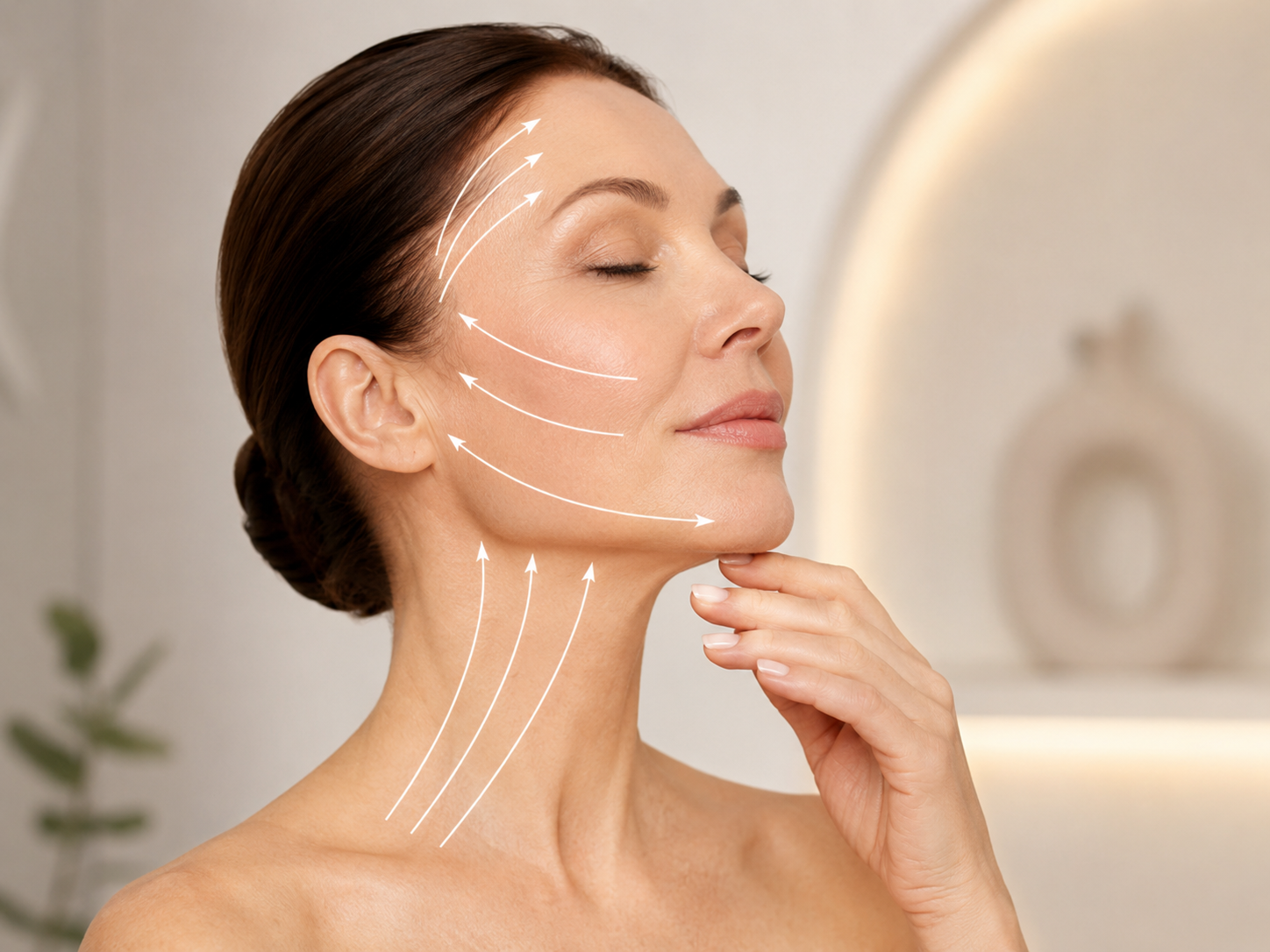
A facelift is a surgical procedure designed to correct sagging, loosening, and loss of contour that develop over time in the face and neck. One of the key factors affecting the outcome of the procedure is It is the recovery process following a facelift..
During the recovery period, the face’s new appearance does not emerge all at once. In the first few days, swelling, bruising, tightness, and temporary changes in sensation may occur. As these effects subside over time, facial features become more defined and the tissues begin to adapt to their new positions.
The recovery period following a facelift may vary depending on the surgical technique used, the extent of the procedure, the patient’s age, skin type, overall health, and the rate at which tissues heal. For this reason, it is important to consider the timeframes mentioned online as a general guide and to follow the recommendations of your own surgeon.
In general, while most of the noticeable swelling and bruising subsides within the first few weeks, it may take several months for the face to achieve a completely natural and settled appearance.
How Does the Recovery Process Proceed After a Facelift?
Recovery after a facelift typically occurs in stages. The initial phase, which begins immediately after the surgery, is a period when swelling and bruising are more pronounced. In the weeks that follow, the swelling subsides, the incision sites heal, and the patient begins to gradually return to their daily routine.
The recovery process can generally be divided into the following stages:
- The first 24–72 hours: This is a period when rest and close monitoring are the top priorities.
- First week: Swelling and bruising may be noticeable, but they will begin to subside as the days go by.
- Week 2: The face begins to look more and more natural.
- Weeks 3 and 4: Many people can return to their social and daily lives more comfortably.
- The first few months: Swelling subsides, and facial contours become increasingly defined.
- Late stage: The appearance of surgical incisions matures over time, and the final result can be assessed more clearly.
According to the American Society of Plastic Surgeons, although a significant portion of the healing process occurs within the first month, it may take longer for very mild swelling, tightness, or changes in sensation to disappear completely.
The First 24–72 Hours After a Facelift
The first 24–72 hours following a facelift are one of the periods during the recovery process that require the closest monitoring.
After the procedure is complete, a dressing or bandage may be applied to help minimize swelling and bruising around the face. Depending on the surgical technique, temporary drains may also be used.
In the early days:
- Swelling may occur in the face.
- Bruises may be visible.
- You may feel some tightness in your skin.
- You may experience mild or moderate discomfort.
- You may experience temporary numbness in certain areas of your face.
- You may feel tired as a result of the anesthesia.
In some people, swelling may not reach its peak immediately after surgery. It may increase during the first few days and then begin to gradually subside. The ASPS patient information sheet notes that swelling and bruising may be particularly noticeable around the third or fourth day.
During this period, it is important to follow the medication prescribed by the surgeon, the wound care recommendations, and the follow-up schedule.
The First Week After a Facelift
Throughout the first week, the facial tissues continue to heal. While some swelling and bruising are to be expected, the person is expected to feel more comfortable as the days go by.
It is not appropriate to assess the final result of the facial procedure, especially during the first week. Due to swelling, the face may appear wider, tighter, or asymmetrical than usual. This appearance is often a temporary part of the healing process.
During this period:
- Keeping the head in an elevated position,
- Avoid strenuous physical activities,
- Protecting the surgical site from trauma,
- Following the wound care regimen recommended by the doctor,
- Ensuring that follow-up appointments are not missed
is important.
You should avoid any movements that could put pressure on your face and any skincare routines that your surgeon has not approved.
The 2- to 4-Week Period Following a Facelift
Starting in the second week, a significant change may be noticeable in the recovery process following a facelift.
The swelling and bruising that were noticeable in the early days usually begin to subside significantly. The person may feel more energetic and can gradually resume their daily activities.
By the end of the second week, many people may feel more comfortable in social settings. However, mild swelling, tightness, or numbness may persist.
During the third and fourth weeks, facial contours may begin to become more defined. Depending on the extent of the surgery and the rate of recovery, the level of physical activity may also be gradually increased with the surgeon’s approval.
It is noted that many people are able to return to work and their normal daily activities within approximately two to three weeks after traditional facelift surgery.
When Do Swelling and Bruising Subside After a Facelift?
Swelling and bruising after a facelift, is one of the most frequently asked questions during the recovery process.
Since the procedure involves working on tissues, swelling may occur as part of the body’s natural healing response. The extent of bruising, however, can vary from person to person.
Swelling and bruising, which are usually more noticeable during the first few days, subside in the following weeks. Bruising and swelling can last for about two to three weeks. However, the individual’s rate of recovery and the extent of the procedure can affect this timeframe.
A reduction in significant facial swelling does not mean that all the swelling has completely subsided. Mild swelling that is not very noticeable from the outside may persist for a longer period of time.
For this reason, it can be misleading to evaluate the outcome of the surgery based solely on how it looks during the first few weeks.
When Are the Stitches Removed After a Facelift?
The type of sutures used in facelift surgery may vary depending on the surgical technique. Both dissolvable sutures and sutures that must be removed by the surgeon may be used.
The timing for removing the stitches may vary depending on the incision site and the technique used.
The NHS patient information states that the stitches from a facelift can usually be removed within approximately 7–14 days. It also notes that some stitches can be removed within 5–10 days.
For this reason, rather than setting a standard date for when the stitches will be removed, the surgeon’s assessment during the follow-up examination should be the determining factor.
The person should not tamper with the stitches.
How Long Do Pain, Tightness, and Numbness Last After a Facelift?
After a facelift, some people may describe a sensation of tightness, pressure, tenderness, or numbness rather than severe pain.
Due to tissue repositioning and swelling in the surgical area, the face may feel tight, especially during the first few days.
Temporary numbness or changes in sensation may also occur. As the nerve endings and surrounding tissues heal, this sensation usually subsides over time.
It notes that sensations such as tightness and numbness may persist for several weeks after a facelift; for some people, it may take two to three months for the face to feel completely “normal” again.
Pain that is more severe than expected or that is gradually worsening should be considered different from the normal healing process and reported to the surgical team.
How Should You Sleep After a Facelift?
Sleeping Position After a Facelift, which is particularly important in the first few days for controlling swelling and protecting the surgical site from pressure.
It is generally recommended to keep the head elevated above the level of the torso during the first few days. To do this, you can use multiple pillows or choose a raised sleeping position that is comfortable for you.
The NHS recommends keeping your head elevated with pillows for the first few days after a facelift.
Since lying on your side or stomach may put pressure on the surgical site, you should consult your surgeon to determine which positions should be avoided and for how long.
Placing support pillows around the person can also provide comfort by reducing involuntary turning during sleep.
When Can You Shower and Wear Makeup After a Facelift?
The most important consideration when showering after a facelift is to protect the surgical incisions and dressings.
The type of dressing used during showering may vary depending on the incision technique and the doctor’s care protocol. In its general patient information, the NHS states that bandages should not get wet during the first two days following a facelift.
For this reason, the patient should not remove the dressings or apply water directly to the incision sites without first obtaining permission from their surgeon.
The condition of the incision sites is also important for resuming makeup use. It is necessary to wait until the surgical areas have healed and are no longer at risk of infection.
In particular, applying cosmetic products directly over the incision lines in the early stages may not be recommended. The surgeon should determine when it is safe to start wearing makeup during a follow-up visit.
When Can You Return to Work and Social Life After a Facelift?
The time it takes to return to work after a facelift varies depending on the nature of the person’s job and the extent of the procedure.
The return-to-work timeline for someone with a desk job may not be the same as that for someone in a job that requires intense physical activity.
After traditional facelift surgeries, many people experience approximately within two to three weeks It is reported that he has been able to return to work.
When returning to social life, it is important for the person to feel comfortable. As bruising and swelling subside significantly after the second week, some people may feel more comfortable participating in social settings.
However, the fact that the face looks completely natural from the outside after surgery does not mean that the tissues have fully healed. Even if the person has returned to their social life, the healing of the internal tissues continues.
When Can You Start Exercising After a Facelift?
During the recovery period, there is a distinction between light movement and intense exercise.
Unless otherwise specified by your doctor, short, light walks can be included in your exercise program early on to support circulation. However, you may need to wait longer before resuming weightlifting, running, intense cardio, and other high-intensity exercises.
The patient information sheet states that strenuous exercise may be limited for at least approximately three weeks.
However, this period is not the same for everyone.
If a neck lift, eyelid surgery, or another surgical procedure was performed in conjunction with a facelift, the plan for returning to sports may differ.
For this reason, it is important to obtain the surgeon’s approval during a pre-exercise medical examination before starting a sports program.
When Do Scars from a Facelift Fade?
In a facelift, surgical incisions are planned to be placed along natural anatomical transitions and in less conspicuous areas, such as the hairline, as much as possible.
In a classic facelift, incisions are typically made along the hairline and the natural creases around the ears.
In the early stages of recovery, the incision lines may appear pink or more prominent. As healing progresses, their color and appearance will begin to change.
The healing of surgical scars is not a quick process. Changes may continue over the course of weeks and months.
Leave visibility;
- Skin structure
- Genetic traits
- Surgical technique
- Tension in the Kesi region
- Wound Care
- Sun Protection
- Tobacco use
It can be influenced by many factors such as these.
Scars from a facelift may not disappear completely, but they may become less noticeable over time. The NHS also notes that scars from a facelift may fade over time but may not disappear completely.
When Do the Results of a Facelift Fully Settle In?
One of the most common mistakes made after a facelift is evaluating the results too early.
Due to swelling and tightness in the first few weeks, it may not be possible to see the actual facial contours.
As the swelling subsides:
- The jawline may become more defined.
- Facial contours may begin to appear more defined.
- The tissues can take on a more natural appearance.
- You may feel less tense.
- Surgical scars may gradually fade.
Although the appearance will largely stabilize within the first few months, very mild swelling and tissue changes may persist.
The NHS states that the final results of a facelift may take approximately Within 6–9 months It states that it can be assessed more clearly.
For this reason, changes following a facelift should not be evaluated based solely on the “first month.” To track the results of the surgery, photos taken at different times under the same lighting, angle, and position can make it easier to understand the changes.
Tips to Support Recovery After a Facelift
Although a significant part of recovery after a facelift depends on the body’s natural healing ability, the postoperative care process is also important.
During the recovery period, it is generally recommended to pay attention to the following points:
Following the doctor's recommendations:
Personal instructions provided after surgery—ranging from medications to be taken to wound care—should be given top priority.
Ensuring that follow-up appointments are not missed:
Follow-up visits are important for assessing healing, checking the stitches, and detecting potential problems early.
Keeping the head elevated during the early stages:
Resting in an elevated position, especially during the first few days, can help control swelling.
Avoid strenuous physical activity:
You should wait until your doctor gives you permission to engage in activities that could increase blood pressure or put pressure on the surgical site.
Adequate rest:
Sleep and rest are important during the body's healing process.
Balanced nutrition:
Adequate intake of protein, vitamins, minerals, and fluids is among the factors that support the overall wound healing process.
Avoiding cigarette use:
Since smoking can negatively affect blood flow to tissues and wound healing, it is a significant risk factor during the postoperative period.
Sun protection:
It is important to protect healing incision sites from direct, intense sunlight and to use appropriate sunscreen during the period recommended by the surgeon.
The most important point is that general advice found online does not replace the postoperative instructions provided by a patient’s own surgeon.
In What Situations Should You See a Doctor After a Facelift?
A facelift is a surgical procedure, and as with any surgical procedure, there are certain risks of complications.
Some swelling, bruising, tightness, and temporary numbness are to be expected. However, if symptoms that differ from the expected course of recovery occur, you should contact the surgical team.
In particular;
- Pain that is much more severe than expected or that is gradually worsening,
- Sudden or rapidly increasing swelling,
- Noticeable swelling on one side only,
- Uncontrolled bleeding,
- A foul-smelling or unusual discharge from the incision site,
- Signs suggestive of an infection,
- A new, noticeable loss of movement or sensation,
- Unexpected symptoms not previously explained by the doctor
In such cases, you should contact the healthcare facility where the procedure was performed.
Bleeding, infection, fluid accumulation, delayed wound healing, changes in sensation, and, rarely, nerve damage are among the complications associated with facelift surgery.
Early evaluation is important when severe pain or unexpected symptoms occur.
The recovery process following a facelift is a period that requires patience and progresses in stages. While the swelling and bruising seen in the first few days gradually subside over time, facial contours become increasingly defined. Although many people are able to return to their daily and social lives within a few weeks, it may take longer for the tissues to heal completely and for the face’s final appearance to be assessed.
At West Estetik, when evaluating a facelift procedure, the patient’s facial anatomy, skin type, expectations, and needs are all taken into account to develop a personalized surgical plan. During the post-operative period, following the surgeon’s personalized follow-up instructions and care recommendations is an important part of the recovery process.