
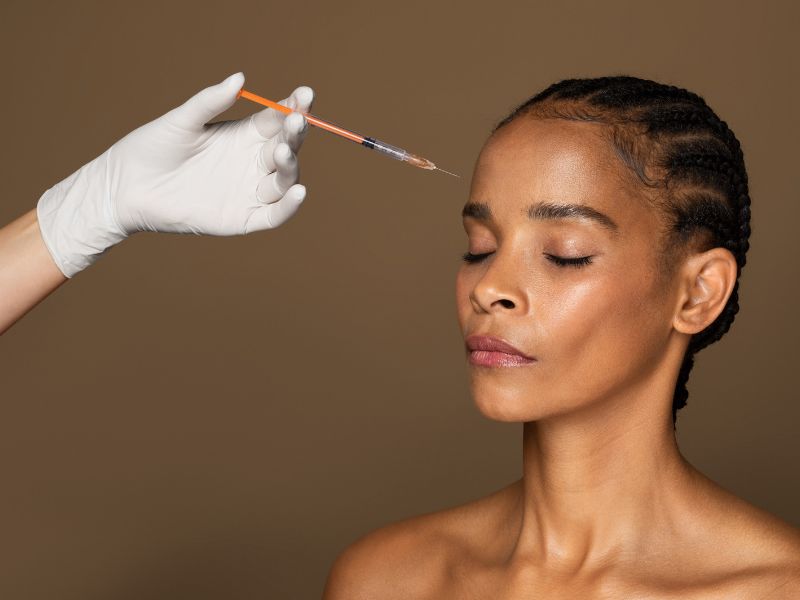
Aesthetic procedures performed on the upper face directly affect a person’s overall facial expression and appearance. The aging process, gravity, facial movements, and genetic factors can lead to the formation of deep forehead wrinkles and the gradual descent of the eyebrows. This can make a person appear more tired, sad, or angry than they actually are.
Two of the most commonly performed surgical procedures for upper facial rejuvenation are the forehead lift and the brow lift. Although these two procedures are often confused with one another, they have distinct differences in terms of the anatomical areas they target, the techniques used, and the aesthetic results they provide. Choosing the appropriate treatment is essential for maintaining the natural balance of the face and fully meeting the patient’s expectations.
What Is Forehead Lift Surgery and How Is It Performed?
A forehead lift is a surgical procedure that repositions sagging tissues in the upper facial area, extending from the hairline to the eyebrows, and addresses horizontal forehead wrinkles and vertical lines between the eyebrows (frown lines).
The surgery is performed under general anesthesia. It can be carried out using either a traditional (open) approach or an endoscopic technique. In the traditional method, a long incision is made within the scalp, whereas the endoscopic forehead lift technique, which is more commonly preferred today, involves making several small incisions (1–2 cm) within the scalp. Using specialized camera-assisted surgical instruments, the muscles and underlying tissues in the area are released, lifted upward, and secured in their new positions. If excess tissue is present, it is removed, and the procedure is completed by closing the incisions with sutures.
What Is Brow Lift Surgery and Which Techniques Are Used?
A brow lift is an aesthetic surgical procedure that specifically targets the eyebrows, their natural arch, and the anatomy surrounding the eyes. It aims to reposition eyebrows that have descended toward the upper eyelids due to gravity, restoring them to a more youthful and aesthetically pleasing position.
Different brow lift techniques may be used depending on the patient’s individual needs:
- Endoscopic Brow Lift: Small incisions are made within the scalp in the temple area to lift the outer and central portions of the eyebrows.
- Temporal Lift (Temple Lift): This technique lifts the outer tail of the eyebrow and the surrounding eye area upward and outward, creating an “almond eye” or “fox eye” effect.
- Direct Brow Lift: This procedure involves removing a small section of skin immediately above the eyebrow and is generally preferred for older patients.
- Thread Lift Techniques (Non-Surgical Brow Lift): This is a non-surgical alternative based on lifting the eyebrows using medical threads; however, its results are less long-lasting than those of surgical techniques.
Combined Procedures: Can a Forehead Lift and Brow Lift Be Performed Together?
Yes, these two procedures are frequently combined in clinical practice. Aging of the upper face generally does not occur in isolation; as the forehead skin loses elasticity, the eyebrows also gradually descend.
As part of a comprehensive upper facial lifting procedure performed using endoscopic techniques, forehead wrinkles can be addressed while the eyebrows are repositioned to their ideal anatomical location. Additionally, when these procedures are combined with upper eyelid surgery (blepharoplasty), which removes excess skin from the eyelids, significant rejuvenation of the eyes and surrounding area can be achieved.
Comparison of Surgical Procedures and Recovery Periods
The surgical and recovery characteristics of these two procedures vary depending on the extent of the intervention.
Duration of Surgery
- Brow Lift: Generally performed under local anesthesia or sedation, the procedure takes approximately 45 minutes to 1.5 hours.
- Forehead Lift: Usually performed under general anesthesia, the procedure takes approximately 1.5 to 2.5 hours to complete.
Recovery Process
- After Brow Lift Surgery: Recovery is generally relatively quick. Mild bruising and swelling may occur around the temples or eyebrows. Patients can usually return to their social activities and work within 4–5 days.
- After Forehead Lift Surgery: Since the treatment area is larger, swelling and bruising around the forehead and eyes are normal during the first few days. A light dressing is applied to the head. It may take approximately 10 to 14 days for patients to fully return to their social activities.
Longevity of Results and Expectations
Her iki yöntemde de elde edilen sonuçlar uzun yıllar kalıcılığını korur. Cerrahi tekniklerle yapılan endoskopik alın germe and kaş kaldırma işlemleri, yaşlanma sürecini durdurmasa da zamanı geriye sarar. Kişi yaşlanmaya kaldığı yerden, ancak daha genç bir noktadan devam eder.
Yaşam tarzı, cilt kalitesi, sigara kullanımı ve güneş maruziyeti gibi faktörler sonuçların kalıcılık süresini doğrudan etkiler. Başarılı bir cerrahi müdahale sonrasında elde edilen estetik görünüm genellikle 8-10 yıl kadar etkinliğini korumaktadır.
Frequently Asked Questions
Kaş kaldırma işlemi göz kapağı düşüklüğünü düzeltir mi?
Kaşın aşağı düşmesinden kaynaklanan yalancı göz kapağı yığılmalarını düzeltir. Ancak doğrudan göz kapağının kendi kas veya cilt fazlalığından kaynaklanan durumlarda blefaroplasti (göz kapağı estetiği) ile kombine edilmesi gerekir.
İşlem sonrası iz kalır mı?
Gelişen endoskopik teknikler sayesinde kesiler genellikle saçlı derinin içerisine gizlenir. Bu sayede dışarıdan bakıldığında görünür bir ameliyat izi kalmaz.
Ameliyatsız kaş kaldırma yöntemleri cerrahinin yerini tutar mı?
Botoks veya ip askı gibi ameliyatsız yöntemler hafif dereceli düşüklüklerde geçici çözümler sunar. Ancak belirgin doku sarkmalarında ve kalıcı sonuç arayışında cerrahi yöntemler tek kesin çözümdür.
Operasyon sonrası ifademde yapaylık olur mu?
Doğru planlama ve tecrübeli bir cerrahi yaklaşımla dokular aşırı gerilmeden, kişinin doğal anatomik hatlarına uygun şekilde konumlandırıldığında şaşırmış veya yapay bir ifade oluşmaz; aksine taze ve dinlenmiş bir yüz ifadesi elde edilir.