

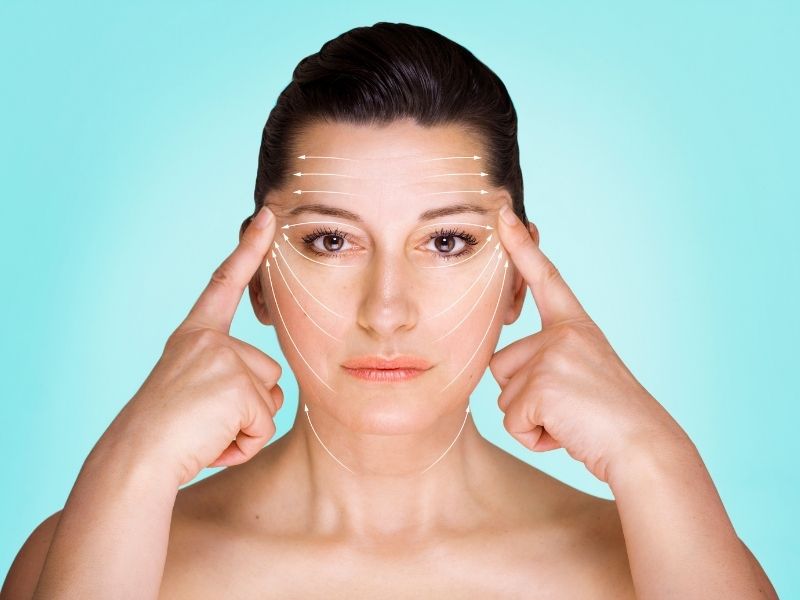
Facelift surgery is an aesthetic surgical procedure aimed at surgically correcting skin laxity, sagging, and changes in facial contours that occur in the face and neck area due to aging. One of the most frequently asked questions among people researching the procedure is whether scars remain after facelift surgery.
Since surgical incisions are made in the skin during facelift surgery, it would not be accurate to describe the healing process as completely scar-free. However, facelift incisions are placed, whenever possible, in less noticeable areas such as the hairline, in front of the ears, within the natural folds around the ears, and behind the ears. In this way, the aim is to reduce how noticeable the surgical scars are from the outside once wound healing is complete.
The appearance of the scar does not depend solely on the surgical technique. The individual’s skin characteristics, wound-healing properties, smoking, tension along the incision line, sun exposure, and postoperative care can also affect the appearance of scars.
Where Are Facelift Scars Located?
The incision sites in facelift surgery are not exactly the same for everyone. The location of the incisions may be planned according to the facelift technique to be performed, the individual’s facial anatomy, the amount of excess skin, and whether the neck area will also be treated.
In a traditional facelift procedure, the incision line may generally begin at the hairline and extend toward the front of the ear. Continuing along the natural anatomical folds of the ear, the incision may extend around the earlobe, behind the ear, and, when necessary, into the scalp.
The main reason these areas are preferred is to keep surgical scars away from the more visible areas of the face.
Incision sites in facelift surgery may generally be located in the following areas:
- Hairline in the temple area
- Natural folds in front of the ear
- Around the outer ear
- Behind the ear
- Scalp
- When necessary, the natural crease beneath the chin
In some patients whose surgical plan also includes a neck lift, a small incision beneath the chin may be necessary. The length and location of the incisions may vary depending on the patient’s needs and the surgical technique used.
Are Scars Very Noticeable After Facelift Surgery?
It is normal for the incision lines to be visible immediately after facelift surgery. During the first few weeks, there may be redness, mild elevation, or discoloration around the incision. This appearance does not mean that the surgical scar will permanently remain the same.
Wound healing is a gradual process. Incision lines that appear pinker or redder during the initial period may become lighter in color over time. Tissue firmness may decrease, and the incision line may become more consistent with the surrounding skin.
For this reason, it is not accurate to evaluate the long-term result based on the appearance of the scars only a few weeks after facelift surgery.
The final appearance of the scar develops over several months depending on the individual’s wound-healing process. In some people, scars become very fine lines, while in others, more noticeable scarring may develop.
When Do Facelift Scars Fade?
Surgical scars may not disappear completely. The main aim is for the scar to become thinner, lighter in color, and less noticeable over time.
During the first few weeks after facelift surgery, the incision areas are generally more noticeable. In the following months, changes in the appearance of the scar may occur as the scar tissue matures.
During the general healing process:
Redness and mild elevation may be seen along the incision line during the first few weeks.
The color and texture of the scar may begin to change within the first few months.
Scar maturation may continue over a period of 6–12 months.
In some people, it may take longer than one year for the scars to reach their final appearance.
Since these timeframes vary from person to person, it is not possible to provide an exact timeline.
What Factors Affect the Visibility of Scars After a Facelift?
How a scar heals after facelift surgery depends on many different factors.
Incision Placement
Planning the incisions in accordance with the hairline and the natural anatomical folds around the ears may help make the scars less noticeable.
Skin Characteristics
Not everyone’s skin heals in the same way. Skin thickness, elasticity, pigmentation characteristics, and an individual’s tendency for wound healing may affect the appearance of scars.
Tension Along the Incision Line
Excessive tension on a surgical wound may cause the scar to widen or become more noticeable. For this reason, in facelift surgery, it is important to appropriately reposition the deeper supporting tissues of the face rather than simply pulling the skin excessively.
Smoking and Nicotine Use
Nicotine can negatively affect blood flow to the tissues. Therefore, smoking and other nicotine products are among the factors that may negatively affect wound healing.
Sun Exposure
Intense sun exposure to newly healing scar tissue may cause discoloration in the scar area. For this reason, it is important to protect the incision areas from the sun for the period recommended by the surgeon after surgery.
Postoperative Care
Keeping the incision areas clean, changing dressings on time, and following the care instructions provided by the doctor are important parts of the wound-healing process.
Does Facelift Surgery Leave Scars?
A deep plane facelift is one of the facelift techniques in which deeper anatomical tissues are released and repositioned rather than treating only the skin layer of the face.
However, deep plane facelift surgery also requires surgical incisions. Therefore, it would not be accurate to state that “a deep plane facelift is completely scar-free.”
In the deep plane technique, incisions are also generally planned along the hairline and around the ears. The appearance of the scars is affected by surgical planning, tension along the incision line, skin characteristics, and the individual’s wound-healing properties.
The main difference between a deep plane facelift and a traditional facelift is not limited to scarring. Different techniques may vary in terms of the anatomical plane in which the tissues are released and repositioned.
Does a Mini Facelift Leave Scars?
A mini facelift is one of the surgical methods that may be considered for some patients who have more limited facial sagging and do not require an extensive face and neck lift procedure.
In mini facelift procedures, the incisions may be more limited compared with traditional facelift surgery. However, a mini facelift is also a surgical procedure, and incisions are made in the skin.
Therefore, scars may also form after a mini facelift. A shorter incision length alone does not mean that no scar will remain. How the scar heals still depends on factors such as the individual’s skin characteristics, wound healing, and surgical planning.
The facelift technique to be performed should not be determined solely by considering the surgical scar. The degree of facial sagging, the condition of the neck area, skin quality, and the individual’s expectations should be evaluated together.
What Should Be Considered to Help Scars Heal Better After a Facelift?
The postoperative period is as important as the surgical technique in wound healing after a facelift.
First of all, the dressing and wound-care recommendations provided by the surgeon should be followed. Applying creams, oils, or cosmetic products that have not been recommended by the doctor to the incision areas should be avoided.
Unnecessary interference with the incision area should be avoided until the wound has completely healed. Picking at scabs or repeatedly touching the area to check it may negatively affect the healing process.
Other points to consider during the postoperative period include:
- Keeping the incision areas clean
- Following the wound-care program recommended by the doctor
- Avoiding smoking and nicotine use
- Protecting the incision areas from direct sunlight
- Attending follow-up appointments
- Waiting until the doctor gives permission before engaging in strenuous physical activities
- Consulting a physician if signs of infection develop in the wound area
The products used for wound care may vary from person to person.
Silicone-based scar products or different treatments may be considered for some patients; however, the surgeon who performed the operation should determine when these products or treatments should be used.
Can Facelift Scars Be Hidden in the Hair?
In facelift surgery, some parts of the incision line may be planned along the hairline or within the scalp. The aim is to conceal the scars as much as possible within natural anatomical areas.
However, the entire incision line does not necessarily need to be within the hair. In particular, incisions around the ears may extend through the natural folds in front of the ears and behind the ears.
When determining the location of the incision, it is important not only to conceal the scar but also to preserve the hairline and avoid disrupting the natural facial anatomy.
Therefore, incision planning should be individualized according to each patient’s facial and hairline anatomy.
Can Keloids Develop After Facelift Surgery?
A keloid is a raised scar that develops as a result of excessive scar tissue formation during wound healing. It does not occur in every patient, and some individuals may have a greater predisposition to developing keloids.
A history of prominent raised scars after previous surgeries, injuries, or ear piercings is among the important information that should be shared with the doctor in this regard.
If a keloid or hypertrophic scar develops, the treatment approach may be planned according to the characteristics of the scar. Silicone products, injections, laser methods, or different treatments may be considered following evaluation by a doctor.
Can Laser Treatment Be Applied to Facelift Scars?
Laser treatments may be considered for some scars that remain noticeable after facelift surgery. However, not every scar is suitable for laser treatment, and the timing of laser treatment is important.
The incision line must be completely healed, and the scar tissue needs to be evaluated. Different laser technologies may be preferred depending on whether there is redness, discoloration, or surface irregularity in the scar.
For this reason, laser or similar treatments should not be started independently immediately after surgery. Whether scar treatment is necessary and which method should be used should be evaluated by a plastic surgeon or the relevant physician.
Is It Normal to Have Scars After Facelift Surgery?
Yes. Since surgical incisions are made during Facelift surgery, it is normal for some degree of scarring to occur. The important point is not so much the presence of the scar, but how noticeable it is in the long term.
In modern facelift procedures, incisions are generally planned using the hairline, the area in front of the ears, behind the ears, and natural anatomical folds. Incision scars that may be more noticeable during the first few months may become thinner and lighter in color as wound healing progresses.
However, everyone’s wound-healing process is different. In some people, scars may become barely noticeable, while in others, they may remain more prominent. Therefore, before surgery, the incision locations and the expected appearance of the scars should be discussed in detail with the surgeon, as well as the facelift technique.