

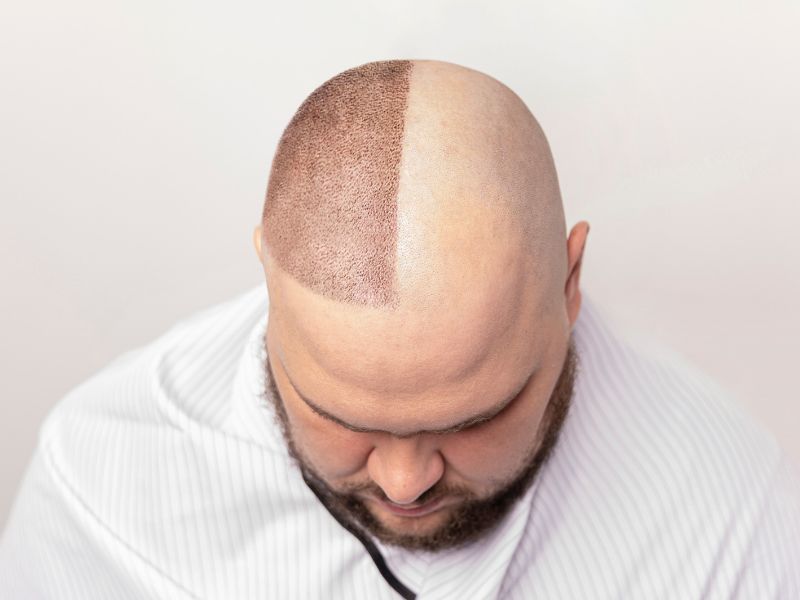
DHI hair transplantation is a modern hair restoration technique that involves transplanting healthy hair follicles into areas affected by hair thinning or complete hair loss. Known as Direct Hair Implantation (DHI), this method uses a specialized implanter pen to place hair follicles extracted from the donor area directly into the recipient area.
The main characteristic of the DHI hair transplant technique is that channel creation and hair follicle implantation are performed simultaneously. In traditional FUE procedures, channels are created before the hair follicles are implanted. In contrast, the DHI method combines these two steps using a Choi implanter pen.
DHI hair transplantation can be used to restore the hairline, increase hair density, and fill thinning areas between existing hair follicles. The procedure can be performed on both men and women. However, suitability depends on several factors, including the cause of hair loss, donor area capacity, and the patient’s overall health condition.
How Is DHI Hair Transplantation Performed?
DHI hair transplantation consists of several stages, including hair follicle extraction, preparation, and implantation into the recipient area. Before the procedure, the degree of hair loss, hair characteristics, and density of the donor area are carefully evaluated.
Hair Analysis and Transplant Planning: During the initial stage, the patient’s hair loss pattern is examined. The size of the recipient area, the position of the hairline, and the number of grafts required are determined. To achieve a natural appearance, the direction of hair growth and compatibility with existing hair are taken into consideration.
Hair Follicle Extraction from the Donor Area: Healthy hair follicles are generally harvested from the back and sides of the scalp. After local anesthesia is administered, hair follicles are individually extracted using microsurgical instruments. The FUE technique is commonly used during this stage.
Preparation of Hair Follicles: The extracted grafts are preserved under appropriate conditions and prepared for implantation. Each graft may contain one or more hair follicles. Preventing damage to the follicles during the procedure is an important factor affecting the success of the transplant.
Hair Implantation Using the Choi Pen: The prepared hair follicles are loaded into a specialized implanter pen. The fine tip of the pen creates a small opening in the scalp while simultaneously placing the graft into the recipient area.
During DHI hair transplantation, the angle, direction, and depth of each implanted follicle are carefully controlled to achieve a natural hair growth pattern.
Who Is a Suitable Candidate for DHI Hair Transplantation?
DHI hair transplantation may be suitable for individuals experiencing hair thinning or hair loss in specific areas who have sufficient healthy hair follicles in the donor region.
People experiencing male pattern baldness, a receding hairline, or reduced hair density in certain areas may be considered candidates for DHI hair transplantation.
The DHI technique may also be used in some cases of female hair thinning. However, hair loss in women can be associated with hormonal changes, iron deficiency, or other underlying medical conditions.
The main factors determining suitability for DHI hair transplantation include donor area capacity, the progression of hair loss, scalp health, and the patient’s expectations.
Hair transplantation may be postponed or considered unsuitable for individuals with active scalp infections, certain uncontrolled systemic diseases, or insufficient donor hair density.
What Are the Differences Between DHI and FUE Hair Transplantation?
DHI and FUE hair transplantation are closely related techniques used in hair restoration procedures. The primary difference between these methods lies in how hair follicles are implanted into the recipient area.
In FUE hair transplantation, hair follicles are individually extracted from the donor area. In traditional FUE procedures, small channels are first created in the recipient area, and the extracted follicles are then placed into these channels.
In DHI hair transplantation, follicles are also commonly extracted using the FUE technique. However, a Choi implanter pen is used during implantation. This device creates an opening and places the hair follicle into the scalp in a single movement.
Other differences between the two methods include:
- In DHI, hair follicles are implanted using a specialized implanter pen, while traditional FUE involves placing grafts into previously created channels.
- DHI may be preferred in certain cases where hair follicles need to be implanted between existing hairs.
- Different FUE implantation techniques may also be suitable for covering larger areas affected by hair loss.
- In DHI procedures, preparing and loading grafts individually into the implanter pen may affect the overall procedure duration.
When choosing between DHI and FUE hair transplantation, the decision should be based on the degree of hair loss and the patient’s individual needs rather than the technique’s name alone.
How Long Does DHI Hair Transplantation Take?
The duration of DHI hair transplantation depends on the number of grafts to be transplanted, the size of the recipient area, and the overall treatment plan.
The procedure generally takes several hours. When a large number of grafts are required, the duration may increase, or the transplantation may need to be divided into multiple sessions.
In the DHI technique, each hair follicle is individually loaded into the implanter pen and then transferred into the scalp. This process requires precision and careful handling.
Therefore, rather than focusing solely on completing the procedure as quickly as possible, it is important to ensure that hair follicles are preserved under appropriate conditions and implanted correctly.
Recovery Process After DHI Hair Transplantation
DHI hair transplantation, mild redness, sensitivity, swelling, and small scabs may appear in both the donor and recipient areas. These symptoms typically occur during the early stages of recovery.
During the first few days, the transplanted area should be protected from friction, impact, and excessive physical contact. Hair washing should be performed according to the schedule and instructions provided by the medical team.
Scabbing in the recipient area generally decreases within the first 7–14 days. However, recovery time may vary depending on the patient’s skin characteristics, the extent of the procedure, and postoperative care.
During recovery, patients may be advised to avoid strenuous exercise, activities that cause excessive sweating, and practices that could damage the scalp for a certain period.
Since hair transplantation is a surgical procedure, complications such as infection, bleeding, folliculitis, scarring, or graft loss may occur. Patients should seek medical attention if they experience increasing pain, significant redness, foul-smelling discharge, or fever.
Can DHI Hair Transplantation Provide Natural-Looking Results?
DHI hair transplantresults depend on implanting hair follicles at appropriate angles and directions to achieve a natural appearance. Hairline design, transplanted hair density, and the transition between existing and transplanted hair are particularly important.
When designing a natural hairline, several factors are considered, including the patient’s age, facial proportions, hair characteristics, and the possibility of future hair loss.
Single-hair follicular units are generally preferred along the frontal hairline, while suitable multi-hair grafts may be used further back to create additional density.
Although the DHI technique allows controlled placement of hair follicles, natural-looking results do not depend solely on the implanter pen. Proper transplantation planning, preservation of the donor area, and the experience of the medical team are essential factors influencing the final outcome.


