
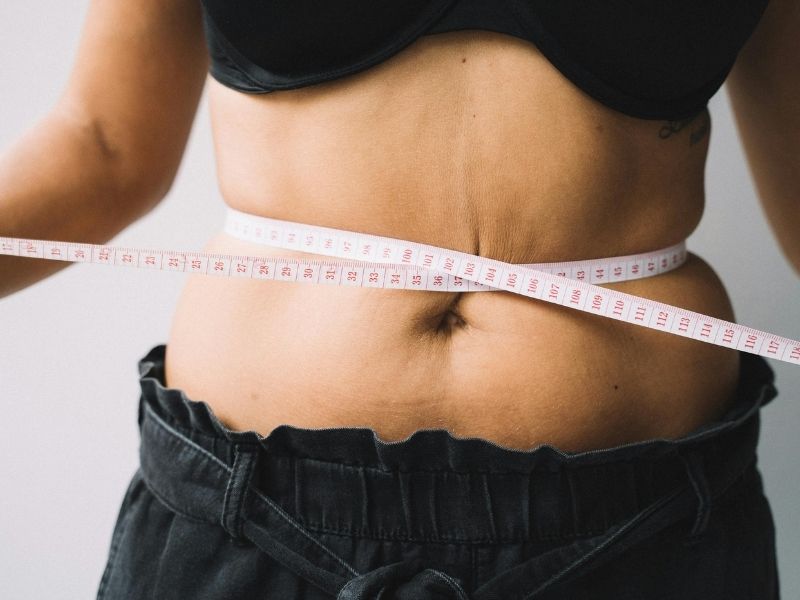
Loosening of the skin, sagging, localized fat accumulation, and weakening of the abdominal wall that develop over time in the abdominal area are not caused solely by weight gain. Pregnancy, rapid weight gain and loss, advanced age, genetic characteristics, and significant weight loss can also change the appearance of the abdominal area. Especially in cases where skin elasticity has decreased, although exercise and nutrition programs may help reduce body fat, they may not completely eliminate excess skin.
A tummy tuck, medically known as abdominoplasty, is a surgical body contouring procedure in which excess skin and, when necessary, fat tissue in the abdominal area are removed, and looseness of the abdominal wall can be corrected. The scope of the procedure is determined according to the amount of excess skin, fat distribution, the condition of the abdominal muscles, and the patient’s expectations.
The purpose of a tummy tuck is not to provide direct weight loss; rather, it is to correct abdominal deformities that develop especially after weight changes or pregnancy and to create a firmer abdominal contour.
What is Tummy Tuck Surgery?
A tummy tuck is an aesthetic surgical procedure in which loose and sagging skin tissue in the abdominal area is surgically removed. When necessary, loose tissues in the abdominal wall can also be tightened during the procedure.
In a full tummy tuck procedure, excess skin below the belly button is generally removed while the skin in the upper abdominal area is advanced downward. If separation or looseness is present in the abdominal wall, repair of these structures may also be included in the surgical plan.
For this reason, a tummy tuck should not be considered simply as a procedure in which excess skin is cut away and removed. Depending on the patient, the procedure may include:
- removal of excess skin tissue,
- tightening of the abdominal wall,
- repositioning of the belly button,
- reduction of localized fat accumulation,
- reshaping of the abdominal and waist contour.
Not all of these procedures are performed in every patient.
The surgical plan is created according to the individual’s anatomy.
How is Tummy Tuck Surgery Performed?
A tummy tuck is generally performed under general anesthesia. Before the operation, the surgeon evaluates the amount of excess skin, the distribution of fat tissue, the position of the belly button, and the structure of the abdominal wall.
In a full tummy tuck, the incision is usually planned in the lower abdominal area so that it can remain concealed under underwear or a bikini. The length of the incision may vary depending on the amount of skin that needs to be removed.
The basic stages of the operation can be summarized as follows:
First, a surgical incision is made in the lower abdominal area. The skin and subcutaneous tissues are then carefully separated from the abdominal wall.
If there is looseness in the structures covering the abdominal muscles or separation along the midline, the abdominal wall may be tightened with sutures. The abdominal skin is then advanced downward, and the excess skin is removed.
In full tummy tuck procedures, the belly button generally maintains its original anatomical attachment, but a new opening is created in the stretched skin and the belly button is positioned appropriately.
In the final stage, the incision is closed. In some patients, temporary drains may be used to reduce fluid accumulation in the surgical area.
Who May Be Suitable for a Tummy Tuck?
A tummy tuck may be considered especially in individuals whose excess abdominal skin cannot be corrected through diet and exercise.
Individuals who may be suitable for the procedure include:
- those who develop significant abdominal sagging after pregnancy,
- those who have excess skin remaining after losing a substantial amount of weight,
- those who have lost skin elasticity due to frequent weight gain and loss,
- those who have loosening or separation of the abdominal muscles,
- those who have significant excess skin below the belly button,
- individuals whose body weight has become relatively stable.
When considering a tummy tuck, aesthetic expectations alone are not evaluated.
Factors such as general health status, medications being used, smoking, previous surgeries, and whether pregnancy is planned in the future are also important in surgical planning.
What Is a Mini Tummy Tuck?
A mini tummy tuck is a more limited abdominoplasty technique that can be performed in individuals whose excess skin and looseness are primarily located below the belly button.
Unlike a full tummy tuck, a smaller area is treated. Therefore, the incision may generally be shorter, and in most cases, repositioning of the belly button is not necessary.
A mini tummy tuck may be considered especially for individuals who do not have significant looseness in the upper abdominal area but have excess skin or mild sagging in the lower abdomen.
However, determining which technique is appropriate cannot be done based solely on external appearance. The abdominal wall, the amount of skin, and fat distribution must be evaluated together.
What Is the Difference Between a Full Tummy Tuck and a Mini Tummy Tuck?
A full tummy tuck is a surgical procedure in which a larger area is treated. It is generally performed in patients who have significant skin looseness both above and below the belly button.
A mini tummy tuck, on the other hand, primarily targets limited excess skin below the belly button.
In a full abdominoplasty, repositioning of the belly button may be necessary, while in a mini abdominoplasty this is usually not required.
The length of the incision and the scope of the operation are also generally greater in a full tummy tuck.
Which technique is more appropriate should be determined based not on the patient’s preferred method, but on the nature of the existing deformity.
How Long Does a Tummy Tuck Take?
The duration of a tummy tuck varies depending on the technique to be performed and any additional procedures carried out during the same session.
Full tummy tuck procedures are usually completed within a few hours, while a mini tummy tuck may take less time.
Repair of the abdominal wall, a large amount of excess skin, or the inclusion of additional procedures such as liposuction may extend the duration of the operation.
For this reason, the duration of surgery should not be expected to be the same for every patient.
Are a Tummy Tuck and Liposuction the Same Thing?
A tummy tuck and liposuction are different procedures.
Liposuction is primarily performed to reduce localized fat tissue. It does not eliminate excess or sagging skin.
One of the main purposes of a tummy tuck is to remove excess skin tissue. When necessary, looseness of the abdominal wall can also be treated.
For example, in a person who has excess fat tissue in the abdominal area but good skin quality and no sagging, liposuction alone may be sufficient. In contrast, in a person with significant excess skin, fat removal alone may not provide the desired tightening effect.
In some patients, a tummy tuck and liposuction may be performed within the same surgical plan to create a more balanced body contour.
What Should Be Considered Before a Tummy Tuck?
A detailed health evaluation is important before a tummy tuck.
The surgeon should be informed about the patient’s previous surgeries, chronic conditions, medications, and any allergies.
If medications or supplements that may affect bleeding risk are being used, they should not be discontinued without medical evaluation.
Smoking may also negatively affect wound healing, so the surgeon’s recommendations regarding smoking before and after surgery should be followed.
In addition, it is important to achieve as stable a body weight as possible before surgery. Planning significant weight loss or weight gain shortly after the operation may change the abdominal contour achieved through surgery.
What Is the Recovery Process Like After a Tummy Tuck?
In the first days after a tummy tuck, tightness, tenderness, swelling, and discomfort during movement may be experienced in the abdominal area.
In the early period, the patient may be advised to walk in a slightly bent-forward position to avoid placing excessive tension on the incision line. As healing progresses, a gradual return to a normal posture is made.
Depending on the surgeon’s preference and the procedure performed, wearing a medical compression garment may be recommended after surgery. The duration of compression garment use may vary depending on the patient and the operation.
The time required to return to daily life also depends on the scope of the surgery and the individual’s healing rate. Desk-based work may be resumed earlier, while a longer waiting period may be necessary before returning to heavy physical activity or exercises that place strain on the abdominal area.
Especially during the first weeks, it is important to follow the surgeon’s instructions regarding movement, wound care, showering, and compression garment use.
Will There Be a Scar After a Tummy Tuck?
Tummy Tuck requires a surgical incision, a scar is expected after the operation.
The incision is generally planned in the lower abdominal area so that it can remain as concealed as possible under underwear. However, the length of the scar varies depending on the amount of skin that needs to be removed.
During the first months, the surgical scar may appear more noticeable and colored. Over time, the color of the scar may fade and its visibility may decrease.
It should be kept in mind that wound healing varies from person to person. Genetic characteristics, smoking, skin properties, infection, wound care, and the individual’s healing tendency may affect the final appearance of the scar.
It is not possible to perform a tummy tuck completely without a scar.
Does a Tummy Tuck Remove Stretch Marks?
A tummy tuck is not a procedure performed specifically for the treatment of stretch marks.
However, stretch marks located on the excess skin that is removed during the surgery may also be removed together with the skin. A significant reduction may be seen particularly in stretch marks located on the skin below the belly button that is planned to be removed.
Stretch marks remaining in the upper abdominal area may not disappear completely after surgery. Their position and visibility may change as a result of skin tightening.
Therefore, a tummy tuck should not be expected to completely eliminate all stretch marks on the abdomen.